
Best Mirrorless Cameras for Beginners (2026): 4 Smart Picks for New Shooters
Canon EOS R100, Sony a6400 and EOS R10 compared for first-time buyers, plus a pocket vlog camera for people who just want easy 4K clips.
We earn a commission if you buy through our links, at no extra cost to you. As an Amazon Associate, we earn from qualifying purchases. How we make money.

The best mirrorless cameras for beginners give you a big sensor, autofocus that finds faces on its own, and a lens mount you can grow into. That last part matters more than most first-time buyers expect, because the body you pick today decides which lenses you can buy for years.
We compared specs, listings and owner feedback for the most popular starter models on Amazon right now. Our list of the best mirrorless cameras for beginners covers three true interchangeable-lens cameras from Canon and Sony, plus one pocket vlogging camera for people who just want simple 4K clips without learning exposure settings.
The best mirrorless camera for most new shooters is the Canon EOS R100 because it pairs a 24.1MP APS-C sensor and face and eye detection autofocus with the smallest, lightest body in the EOS R series. If you want faster bursts and a creator bundle with a microphone, get the Canon EOS R10 Content Creator Kit.
Best Mirrorless Cameras for Beginners at a Glance

- 24.1MP APS-C sensor
- Face and eye detection AF
- Smallest EOS R body

- 330 degree rotating lens
- Face tracking in video
- Up to 3 hours per charge

- 24.2MP APS-C sensor
- 15 fps mechanical shutter
- Mic and tripod grip included
| Product | Price | ||
|---|---|---|---|
 | Best Overall Canon EOS R100 | $499.00 | Check Price |
 | Best Budget VENOPTIX 4K Vlog Camera | $99.99 | Check Price |
 | Premium Pick Canon EOS R10 Creator Kit | $1,349.00 | Check Price |
 | Best for Vlogging Sony Alpha a6400 | $807.56 | Check Price |
1. Canon EOS R100: Best for Most First-Time Buyers
Canon EOS R100
The simplest way into Canon RF lenses
- Sensor: 24.1MP APS-C CMOS
- Processor: DIGIC 8
- Video: 4K up to 24 fps
- Autofocus: Dual Pixel CMOS AF 143 zones
- Lens: RF-S18-45mm F4.5-6.3 IS STM
Pros
- Smallest and lightest EOS R body
- Face eye animal and vehicle detection
- Wi-Fi and Bluetooth built in
Cons
- 4K tops out at 24 fps
- 6.5 fps burst is modest
The EOS R100 is the camera we would hand to someone who has only shot on a phone. Canon lists it as the smallest and lightest body in the EOS R series, and it ships with the RF-S18-45mm F4.5-6.3 IS STM kit lens, which covers wide shots and casual portraits out of the box.
The 24.1MP APS-C sensor is the real upgrade over a phone. It is far larger, so you get natural background blur and cleaner detail. Dual Pixel CMOS AF covers up to 143 zones and can detect human faces and eyes, plus animals and vehicles. That means you can point, half-press and trust the camera to find your subject.
The tradeoffs are about speed. 4K video tops out at 24 fps, Full HD runs at 60 fps, and continuous shooting reaches 6.5 shots per second in One-Shot AF. If you mostly film fast sports or want smooth 4K slow motion, skip it. For family photos, travel and learning the basics, it is the cleanest starting point here, and the reason it tops our ranking of the best mirrorless cameras for beginners.
2. Sony Alpha a6400: Best for Vlogging and Video
Sony Alpha a6400
Compact APS-C body with a flip screen
- Sensor: APS-C
- Mount: Sony E mount
- Video: 4K
- Autofocus: Real-Time Eye AF
- Lens: 16-50mm zoom
Pros
- Flip screen for filming yourself
- Real-Time Eye AF
- Huge E-mount lens choice
Cons
- Some listing bullets describe another model
- Pricier than the R100
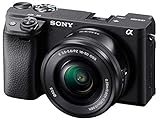
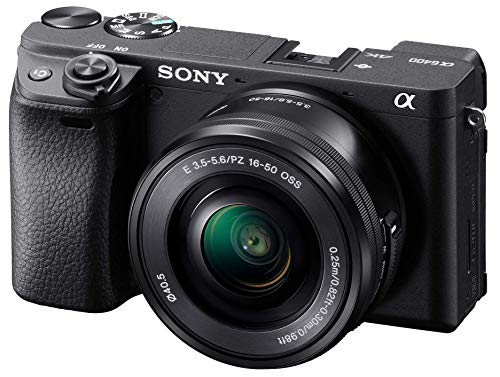
The a6400 has held a spot among the best mirrorless cameras for beginners for years, especially for YouTube, and the listing explains why. It combines a compact APS-C body, Real-Time Eye Auto Focus, 4K video and a flip screen, so you can frame yourself while you talk to the camera. It comes with a 16-50mm zoom and uses Sony’s E mount.
The E mount is the hidden strength. Sony and third-party makers offer a wide range of lenses for it, from small primes to long zooms, so this beginner camera can grow with you. If you already know you want to make videos more than photos, the flip screen alone is a strong reason to choose it over the R100.
One caution. A few bullet points on this Amazon page describe a different Sony model (a 1-inch sensor compact with a fixed ZEISS lens). The title specs are the ones that match the a6400. Check the full spec sheet on Sony’s website before you buy, and skip this one if you want a lighter, simpler menu system.
3. Canon EOS R10 Content Creator Kit: Best for Action and Creators
Canon EOS R10 Content Creator Kit
Faster body plus the accessories you would buy anyway
- Sensor: 24.2MP APS-C CMOS
- Processor: DIGIC X
- Burst: 15 fps mechanical 30 fps electronic
- Autofocus: Dual Pixel CMOS AF with subject detection
- Extras: Stereo mic and tripod grip with remote
Pros
- Fast bursts with RAW pre-shooting
- People animal and vehicle detection
- Bundle saves buying extras
Cons
- Most expensive pick here
- Confirm which kit lens ships
The R10 is the step up for beginners who already know they will shoot moving subjects. The listing quotes a 15 fps mechanical shutter, 30 fps electronic shutter and a RAW Burst Mode with half a second of pre-shooting. Pre-shooting saves frames from just before you fully press the shutter, which helps with birds, pets and kids’ sports.
Autofocus uses Dual Pixel CMOS AF with people, animal and vehicle detection that Canon says was inherited from the EOS R3. The 24.2MP APS-C sensor and DIGIC X processor round out a body that feels closer to an enthusiast camera than a starter model. The Content Creator bundle adds a stereo microphone, wind screen and a tripod grip with a wireless remote.
Watch the bundled lens. The title names the RF-S18-45mm, while the bullet list names the RF-S18-150mm. Confirm what ships before ordering. If you only take vacation photos, this is more camera than you need, and the R100 plus a good prime will serve you better.
4. VENOPTIX 4K Vlogging Camera: Best Budget Alternative
VENOPTIX 4K Vlogging Camera
Pocket gimbal-style camera for casual clips
- Video: 4K 30fps
- Lens: 330 degree auto-rotating
- Screen: 1.72 in touch
- Battery: 2400mAh up to 3 hours
- Wireless: Wi-Fi app control
Pros
- Face tracking in video mode
- Fits in a pocket
- 30 built-in filters
Cons
- Not a mirrorless camera
- No interchangeable lenses
This one is not mirrorless, and we want to be upfront about that. It is a pocket vlogging camera with a 330 degree auto-rotating lens and 180 degrees of manual vertical adjustment. Face tracking (video mode only) keeps you centered while you walk and talk.
We include it because many people searching for a beginner camera really want easy social clips, not photography lessons. The listing quotes 4K 30fps video, Wi-Fi app control, a 1.72-inch touch screen and a 2400mAh battery rated for up to 3 hours of continuous shooting. Close focus down to 3.9 inches helps with product shots.
Skip it if you care about photo quality, low light or background blur. The tiny sensor cannot compete with APS-C, and you can never change the lens. Think of it as a smarter phone gimbal, not a first step into real cameras.

How to Choose the Best Mirrorless Camera for You
Spec sheets make every camera sound great, and the best mirrorless cameras for beginners all look similar on paper. These are the factors that actually change your day-to-day experience in your first two years of shooting.
Pick the lens system first
You are buying into a mount, not just a body. Canon’s RF mount and Sony’s E mount both have deep lens catalogs. If a friend or family member already owns lenses for one system, that is a strong tiebreaker. Our guide to the best Canon RF lenses shows what upgrades look like on the Canon side.
Sensor size beats megapixels
All three interchangeable-lens picks use APS-C sensors, and the 24MP class is plenty for prints and cropping. A larger sensor matters more than a bigger megapixel number. Be skeptical of tiny pocket cameras that advertise huge photo resolutions, since sensor size sets the real limit on detail and low-light quality.
Autofocus with subject detection
Modern autofocus is the single biggest reason a beginner camera today is easier than one from ten years ago. Look for face and eye detection at minimum. Animal and vehicle detection, offered on both Canon picks, helps if you photograph pets or cars.
Screen and video needs
If you plan to film yourself, a flip screen is not optional. The a6400 lists one. For video, also check frame rates. The R100 shoots 4K at up to 24 fps, which looks cinematic but cannot be slowed down smoothly.
The kit lens is a starting point
Every kit lens here is a compact zoom that covers the basics. It is fine for daylight travel and family shots. Once you know what you like, your first upgrade is usually a fast prime, which costs far less than a new body and changes your photos more.

Mirrorless vs Pocket Vlog Camera: Which Do You Need?
Our list mixes two very different kinds of cameras on purpose, because not everyone shopping for the best mirrorless cameras for beginners actually needs one. Here is how they compare at a high level, so you can rule out the wrong type before you compare models.
| Factor | Mirrorless (R100, R10, a6400) | Pocket vlog camera |
|---|---|---|
| Sensor | Large APS-C | Small |
| Lenses | Interchangeable | Fixed |
| Background blur | Natural, adjustable | Limited |
| Learning curve | Moderate | Almost none |
| Best use | Photos, video, long-term hobby | Quick social clips |
If you see yourself shooting for years, buy mirrorless. If you just want better vlogs than your phone makes, the pocket camera is cheaper and simpler. A stable support helps either way, and our best travel tripods guide covers light options that fit in a backpack.
Common First-Camera Mistakes
Even the best mirrorless cameras for beginners can disappoint if you set them up badly. Most early frustration comes from a short list of habits, and every one of them is easy to fix once you know about it. A new beginner camera rewards a little patience in the first few weeks.
- Buying the most expensive body. A mid-level body with a better lens usually makes better photos than a top body with a basic starter zoom.
- Staying in full auto forever. Learn aperture priority in your first month. It is the fastest way to get blurred backgrounds on purpose.
- Ignoring the listing details. Bundles change. Confirm the exact lens and accessories in the box before you order.
- Forgetting storage and backup. RAW files and 4K clips fill cards fast. Plan where your photos will live.

First Settings to Change on a New Camera
A new beginner camera ships with settings meant to suit everyone. A few quick changes in the first week get you sharper, more consistent photos.
- Set auto ISO with a sensible limit. Indoor shots stay bright enough without turning into a grainy mess.
- Shoot RAW plus JPEG if you plan to edit. You keep a ready-to-share JPEG and a RAW file with more room to fix exposure and color.
- Use continuous autofocus with eye detection for people, pets and anything that moves. Single-shot focus is better for still subjects.
- Format the memory card in the camera, not on your computer, before your first shoot.
- Check for a firmware update. Makers often add fixes and features after launch, and updating takes a few minutes.
Then shoot a lot with the kit lens before you buy anything else. A few hundred photos will show you whether you keep wishing for a wider view, more reach or a blurrier background, and that tells you exactly which lens to buy next.
Frequently Asked Questions
What are the best mirrorless cameras for beginners on a tight budget?
The Canon EOS R100 is the most affordable true interchangeable-lens camera on our list, and it includes a lens. If you only want simple vlogs, the VENOPTIX pocket camera costs less but is not mirrorless.
Is APS-C good enough, or should I buy full frame?
APS-C is more than enough for a first camera. Bodies and lenses are smaller and cheaper, and the image quality is a huge jump from a phone. Many of the best mirrorless cameras for beginners use APS-C for exactly that reason.
Canon or Sony for a first camera?
Both are safe. Canon’s R100 and R10 are friendly for photo-first buyers, and you can see the full lineup on Canon USA. Sony’s a6400 is a strong video and vlogging choice thanks to its flip screen and eye autofocus.
How long will a beginner camera last?
Years, if you look after it. Camera bodies age slower than phones because the sensor and lens matter more than software. Most owners upgrade lenses long before the body, which is why choosing a mount you like is the smart first decision.
Do I need to upgrade the kit lens right away?
No. Shoot with the bundled zoom for a few months first. When you notice what frustrates you (low light, background blur, reach), buy a lens that solves that one problem.
Can a beginner camera double as a webcam?
Often, yes, through the maker’s software or a capture setup, but check the current support for your exact model. If video calls are the main goal, a dedicated 4K webcam is simpler.
The bottom line
Among the best mirrorless cameras for beginners, the Canon EOS R100 gives you the most camera for the least complexity: a 24.1MP APS-C sensor, subject-detecting autofocus and the RF lens system in a small body. Pick the Sony a6400 if you vlog, the EOS R10 kit if you shoot action, and the VENOPTIX only if you want quick clips without a learning curve.
Check Canon EOS R100 price

